



Belt Conveyor: Working Principle, Types, Benefits, Applications & Buying Guide
Belt Conveyor: Complete Guide for Industrial Material Handling
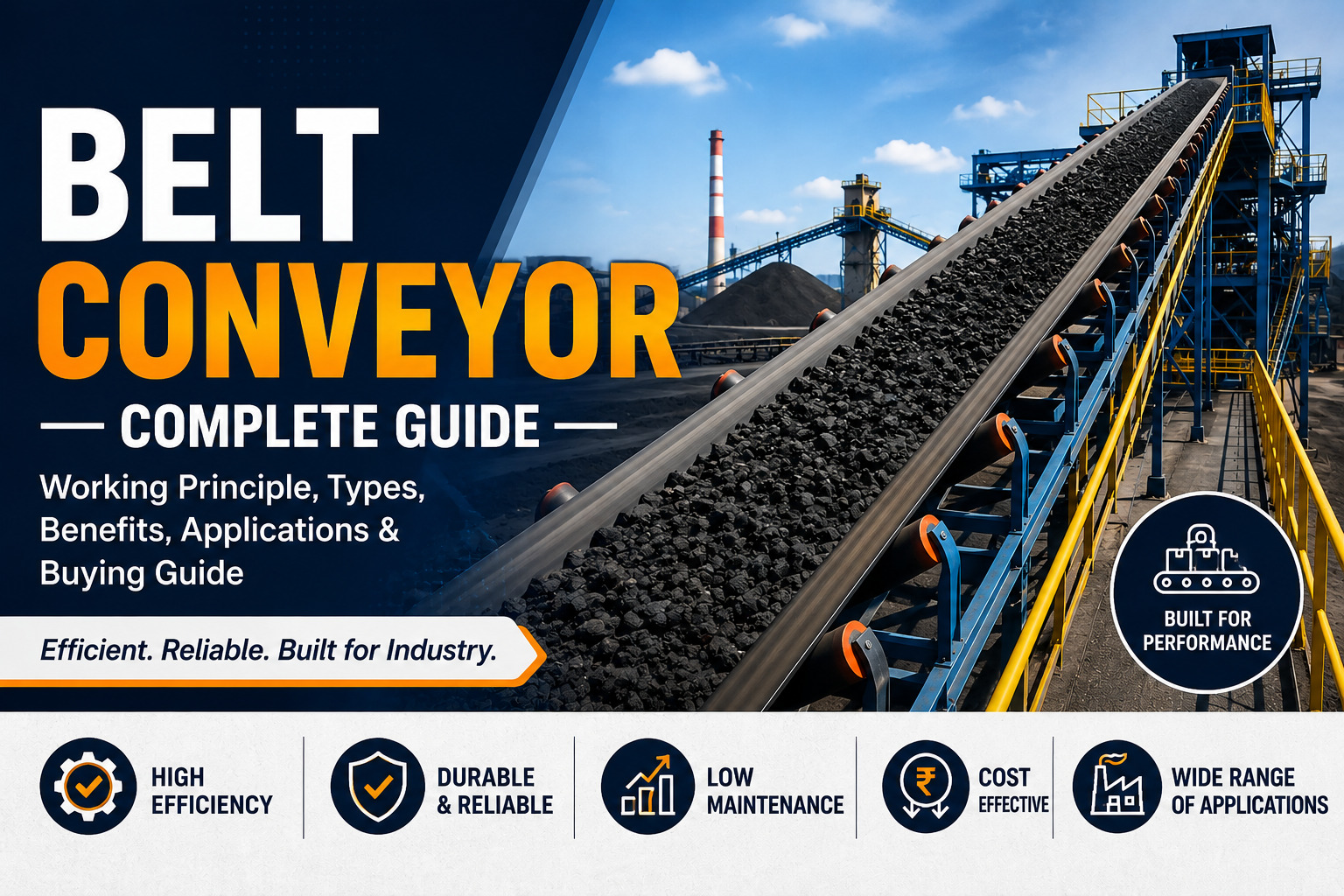
A Belt Conveyor is one of the most widely used material handling equipment systems across industries. From transporting coal in thermal power plants to moving raw materials in cement factories and handling bulk materials in mining operations, belt conveyors offer an efficient, reliable, and cost-effective solution for continuous material transportation.
At Shree Techno Engineers, we have been designing and manufacturing high-quality Belt Conveyors since 2002, serving industries across India and international markets. Our customized conveyor solutions are engineered to deliver superior performance, durability, and low maintenance for demanding industrial environments.
Whether you are planning a new plant or upgrading an existing material handling system, understanding how a belt conveyor works and selecting the right system can significantly improve your operational efficiency.
What is a Belt Conveyor?
A Belt Conveyor is a mechanical conveying system that uses a continuous moving belt to transport bulk materials or packaged goods from one location to another. It is one of the most efficient and economical solutions for handling materials over short, medium, and long distances.
Belt conveyors are widely used because they provide:
As a trusted Belt Conveyor Manufacturer in India, Shree Techno Engineers designs customized conveyor systems suitable for different industries and plant layouts.
Learn more about our Belt Conveyor solutions:
How Does a Belt Conveyor Work?
The working principle of a belt conveyor is simple yet highly effective.
A continuous conveyor belt rotates over a series of rollers, driven by an electric motor through a drive pulley. Materials are loaded onto the moving belt at one end and transported smoothly to the discharge point.
The main working process includes:
This continuous operation allows industries to transport large quantities of materials efficiently while reducing labor costs.
Main Components of a Belt Conveyor
Every industrial belt conveyor consists of several key components that ensure smooth and reliable operation.
Conveyor Belt
The conveyor belt is the primary component responsible for carrying materials. The belt material varies depending on the application, such as rubber, PVC, fabric, or heat-resistant belts.
Drive Pulley
The drive pulley transfers power from the motor to the conveyor belt, enabling continuous movement.
Tail Pulley
Located at the opposite end, the tail pulley helps maintain proper belt alignment and tension.
Rollers & Idlers
Rollers support the belt and reduce friction during operation.
Conveyor Frame
The structural frame provides stability and supports all conveyor components.
Motor & Gearbox
The motor powers the conveyor system, while the gearbox controls speed and torque.
Types of Belt Conveyors
Different industrial applications require different types of conveyor systems.
Flat Belt Conveyor
Ideal for transporting packaged products and lightweight materials.
Applications
Inclined Belt Conveyor
Designed to move materials between different elevations.
Applications
Troughed Belt Conveyor
Used for transporting bulk materials such as coal, minerals, sand, limestone, and aggregates.
Applications
Cleated Belt Conveyor
Equipped with cleats to prevent material rollback on steep inclines.
Portable Belt Conveyor
Lightweight and movable conveyor suitable for temporary operations.
Advantages of Belt Conveyors
Investing in a high-quality industrial belt conveyor offers several operational advantages.
High Productivity
Continuous conveying significantly increases production efficiency.
Reduced Labor Costs
Automation minimizes manual handling and improves workplace safety.
Low Maintenance
Modern belt conveyors require minimal maintenance, reducing downtime.
Manufacturers that follow internationally recognized quality standards often deliver more reliable and durable conveyor systems. Learn more about the ISO 9001 Quality Management System and its role in maintaining consistent product quality.
Energy Efficient
Compared to other material handling systems, belt conveyors consume relatively less energy.
Long Service Life
High-quality construction ensures reliable operation for years.
Safe Material Handling
Properly designed conveyor systems reduce material spillage and workplace accidents.
Industries Using Belt Conveyors
Belt conveyors are essential in many industries.
Power Plants
Used for coal transportation.
Cement Plants
Transport limestone, clinker, gypsum, and cement.
Mining Industry
Move ores, minerals, coal, and aggregates.
Steel Plants
Transport raw materials and finished products.
Chemical Industry
Handle bulk powders and granules.
Fertilizer Industry
Move fertilizer products safely and efficiently.
Food Processing Industry
Transport packaged products and food ingredients.
Belt Conveyor vs Screw Conveyor
Although both systems transport materials, their applications differ.
| Feature | Belt Conveyor | Screw Conveyor |
|---|---|---|
| Material Type | Bulk & Packaged | Powder & Granules |
| Distance | Long | Short |
| Capacity | High | Medium |
| Maintenance | Low | Moderate |
| Speed | High | Moderate |
Belt Conveyor in Complete Material Handling Systems
Belt conveyors often work alongside other industrial equipment to create an efficient material handling system.
These include:
Explore our complete product range:
How to Choose the Right Belt Conveyor
Selecting the right conveyor depends on several factors.
Consider:
Working with an experienced manufacturer ensures you get a customized solution that matches your production needs.
Belt Conveyor Maintenance Tips
To maximize conveyor life:
Regular maintenance reduces downtime and extends equipment lifespan.
Why Choose Shree Techno Engineers?
Why industries choose us:
Industries We Serve
Our belt conveyor systems are widely used in:
Frequently Asked Questions
Conclusion
A Belt Conveyor is one of the most efficient and cost-effective solutions for industrial material handling. From improving productivity to reducing operational costs, it plays a critical role in modern manufacturing and processing industries. Whether you require a standard conveyor or a fully customized system, choosing an experienced manufacturer ensures long-term reliability and performance.
At Shree Techno Engineers, we design and manufacture durable Belt Conveyors, Coal Crushers, Bucket Elevators, Screw Conveyors, Coal Handling Plants, Ash Handling Systems, Pneumatic Conveying Systems, Pulse Jet Bag Filter Systems, Rotary Airlock Valves, and Twin Lobe Root Blowers tailored to your operational requirements.
Call to Action
Looking for a trusted Belt Conveyor Manufacturer in India? Contact Shree Techno Engineers today for customized material handling solutions that improve efficiency, reliability, and productivity.