




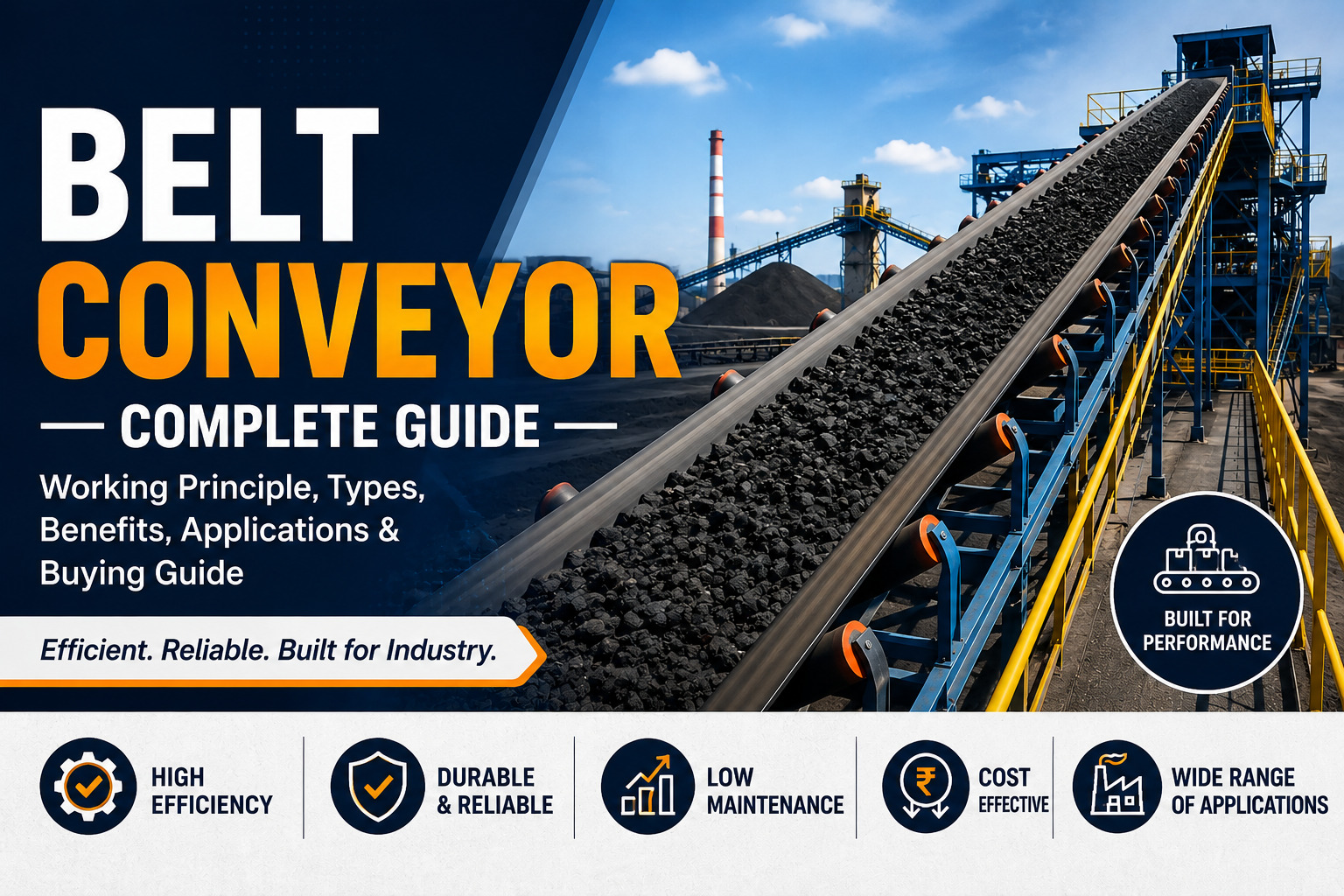
Bucket Elevator: Working Principle, Types, Benefits, Applications & Selection Guide
Bucket Elevator: The Complete Guide for Efficient Vertical Material Handling
In modern industries, efficient vertical transportation of bulk materials is essential for improving productivity and reducing operational costs. A Bucket Elevator is one of the most reliable and efficient material handling equipment designed to move bulk materials vertically with minimal spillage and maximum efficiency.
From cement plants and power plants to mining, fertilizer, chemical, food processing, and steel industries, bucket elevators are widely used for lifting powders, granules, clinker, coal, grains, minerals, and other bulk materials safely and continuously.
Established in 2002, Shree Techno Engineers is a leading Bucket Elevator Manufacturer in India, offering customized, durable, and high-performance vertical conveying solutions designed to meet the specific needs of various industries. Our bucket elevators are engineered for high capacity, low maintenance, and long service life, making them an ideal choice for demanding industrial environments.
What is a Bucket Elevator?
A Bucket Elevator is a vertical conveying system used to transport bulk materials from a lower level to a higher level using a series of buckets attached to a belt or chain. It is designed for continuous lifting of materials while minimizing dust generation, material loss, and manual handling.
Bucket elevators are particularly suitable for transporting:
Unlike horizontal conveyors, bucket elevators require less floor space while efficiently handling large quantities of material.
How Does a Bucket Elevator Work?
The working principle of a bucket elevator is straightforward and efficient.
Material is fed into the inlet section of the elevator. Buckets attached to a continuously moving belt or chain scoop the material and carry it upward. At the top, centrifugal force or gravity discharges the material into the outlet chute, after which the empty buckets return to the loading point for another cycle.
This continuous operation ensures reliable and efficient vertical transportation of bulk materials.
Main Components of a Bucket Elevator
A well-designed bucket elevator consists of several critical components that work together for smooth operation.
Buckets
Buckets collect and transport the material. Their size and shape vary depending on the material being handled.
Belt or Chain
The buckets are mounted on either a heavy-duty belt or chain depending on the application and load capacity.
Head Section
The head section houses the drive pulley or sprocket and serves as the material discharge point.
Boot Section
Located at the bottom, the boot section receives incoming material and supports the return pulley.
Drive Unit
The motor and gearbox provide the required power to lift materials continuously.
Elevator Casing
The casing protects the system, minimizes dust leakage, and ensures safe operation.
Types of Bucket Elevators
Selecting the right bucket elevator depends on the material characteristics and plant requirements.
Centrifugal Discharge Bucket Elevator
Designed for handling free-flowing materials at high speeds.
Applications
Continuous Bucket Elevator
Ideal for handling fragile or abrasive materials with minimal damage.
Applications
Belt Bucket Elevator
Uses a reinforced belt for moderate to high-speed conveying.
Benefits
Chain Bucket Elevator
Designed for heavy-duty industrial applications requiring high strength and durability.
Applications
Advantages of Bucket Elevators
Installing a high-quality bucket elevator offers several operational benefits.
Efficient Vertical Material Handling
Bucket elevators transport bulk materials vertically while occupying minimal floor space.
High Conveying Capacity
Designed to handle large volumes of materials continuously.
Reduced Material Spillage
Enclosed construction minimizes dust generation and product loss.
Low Maintenance
Quality components ensure reliable operation with minimal maintenance requirements.
Long Service Life
Heavy-duty construction provides excellent durability even under demanding industrial conditions.
Energy Efficient
Optimized drive systems reduce power consumption while maintaining high productivity.
Reliable industrial equipment is built not only with high-quality materials but also by following internationally recognized quality management practices. Manufacturers that implement structured quality control processes deliver better performance, consistency, and long-term reliability. To understand the importance of global quality standards in manufacturing, you can refer to the ISO 9001 Quality Management System guidelines.
Industries Using Bucket Elevators
Bucket elevators are widely used across numerous industries.
Cement Industry
For transporting cement, clinker, limestone, and gypsum.
Thermal Power Plants
For handling coal, fly ash, and boiler ash.
Mining Industry
For lifting ores, minerals, and aggregates.
Steel Plants
For transporting raw materials and finished products.
Chemical Industry
For powders, granules, and processed materials.
Food Processing Industry
For grains, flour, sugar, and other food ingredients.
Industries handling bulk materials must also focus on environmental responsibility by minimizing dust emissions and maintaining clean operations. Proper dust collection systems and pollution control equipment help industries comply with environmental regulations while creating a safer workplace. For more information on industrial environmental guidelines, visit the Central Pollution Control Board (CPCB).
Bucket Elevator vs Belt Conveyor
Both systems are essential in industrial material handling, but each serves different purposes.
| Feature | Bucket Elevator | Belt Conveyor |
|---|---|---|
| Material Movement | Vertical | Horizontal/Inclined |
| Floor Space | Minimal | Requires More Space |
| Best For | Vertical Lifting | Long Distance Transport |
| Material Type | Bulk Materials | Bulk & Packaged Materials |
| Capacity | High | High |
Bucket Elevators in Complete Material Handling Systems
A bucket elevator often works together with other industrial equipment to create a complete material handling solution.
These systems include:
Explore our complete product range:
How to Choose the Right Bucket Elevator
Selecting the right bucket elevator depends on several important factors.
Consider:
Consulting an experienced manufacturer helps ensure the equipment is designed to meet your exact application.
Bucket Elevator Maintenance Tips
Regular maintenance helps maximize performance and equipment life.
Best practices include:
Why Choose Shree Techno Engineers?
Established in 2002, Shree Techno Engineers is a trusted manufacturer, supplier, and exporter of Bucket Elevators and Material Handling Equipment.
Why customers choose us:
Frequently Asked Questions
Conclusion
A Bucket Elevator is an essential component of modern industrial material handling systems, providing efficient and reliable vertical transportation of bulk materials. Its space-saving design, high conveying capacity, and low maintenance requirements make it an ideal solution for industries such as cement, power, mining, steel, chemical, fertilizer, and food processing.
At Shree Techno Engineers, we manufacture high-performance Bucket Elevators, Belt Conveyors, Screw Conveyors, Coal Crushers, Coal Handling Plants, Ash Handling Systems, Pneumatic Conveying Systems, Rotary Airlock Valves, Twin Lobe Root Blowers, and Pulse Jet Bag Filter Systems designed to meet your unique operational needs.
Call to Action
Looking for a reliable Bucket Elevator Manufacturer in India? Contact Shree Techno Engineers today for customized vertical material handling solutions that deliver efficiency, durability, and long-term performance.